

S3E2: Remote Realities: Product Management in a Hybrid World with Flora Taagen
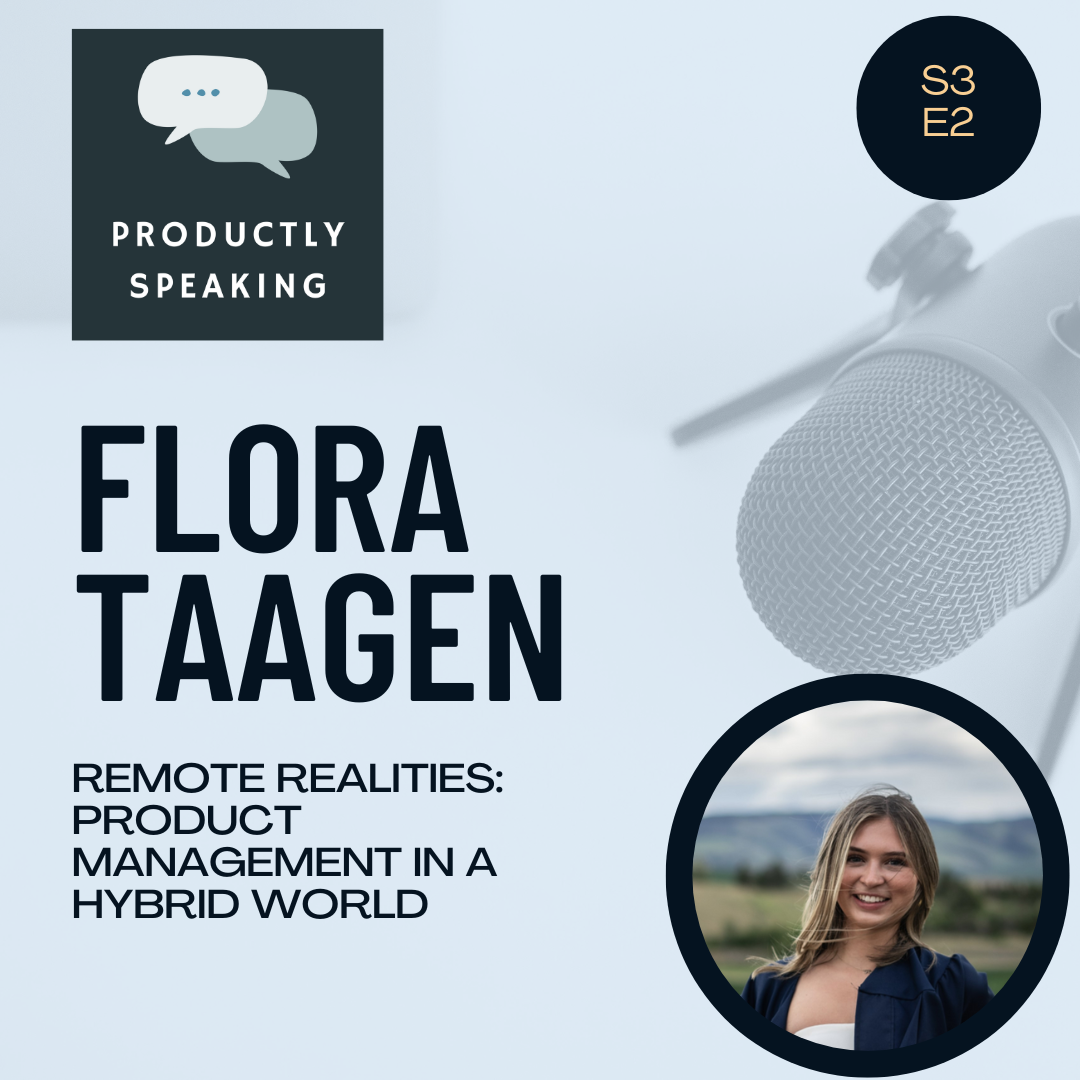


In this insightful episode, Karl Abbott sits down with Flora Taagen, a product manager on the Azure Linux team at Microsoft. Flora shares her unconventional journey into product management, the lessons she’s learned along the way, and her perspective on the evolving nature of work and technology in 2025.
Topics Covered
- Flora’s Path to Product Management
- Transferable Skills from Unexpected Places
- Advice for Aspiring PMs
- Remote Work vs. Distributed Teams
- AI’s Impact on Product Management
- Looking Ahead
Key Quotes
- “I think that empathy and creative problem solving and satisfying customer needs are all deeply transferable skills.”
- “I found it very valuable to spend the first few minutes of my one-on-ones with my fully remote colleagues, just chatting and catching up and not jumping straight into work.”
- “Even if some team members are physically in person in a conference room together, I really appreciate when everyone still joins the Teams call individually and turns on their camera.”
Resources Mentioned
- Cracking the PM Interview by Gayle Laakmann McDowell & Jackie Bavaro
- Cloud Native Computing Foundation (CNCF) for open source contributions
- Microsoft Teams, GitHub Copilot, and other AI productivity tools
Connect with Flora
LinkedIn – Flora Taagen -- https://www.linkedin.com/in/florataagen/
On today's episode, we'll be talking with Flora Tagan, a product manager on the Azure Linux team at Microsoft.
We'll be talking with Flora about her journey into product management and what advice she has for those looking to get started.
We'll also be discussing the nuanced difference between remote work and distributed teams and how to best work with distributed teams.
And as it's 2025, we'll also dive into AI and its impact on the future of product management.
I'm pleased to welcome to Productly Speaking, Flora Tagan.
Hi, Karl. Yeah, thanks so much for having me and thanks for that introduction.
As you mentioned, I'm a product manager on the Azure Linux team at Microsoft and Karl and I first got connected because we both work in the Linux space at Microsoft and then recently had the opportunity to co-present at a conference together.
I've been full time at the company for just about two years now and really excited to share more today about how I got to this position and the different learnings and takeaways that have stuck with me thus far.
And especially around being a product manager and a world where working on a distributed team or with distributed partners is very much my day to day reality.
And also excited to chat a bit about what it's been like to navigate product management at a time where AI is just becoming increasingly available as a tool to help us, I guess, be more productive PMs.
So tell us how you got into product management.
Yeah, so I would say my path into product management wasn't like maybe exactly traditional.
So before joining Microsoft, I was actually studying computer science as an undergrad at Whitman College.
And I was fairly new to tech.
I don't think that I had like written a line of code until my intro to CS class freshman year, but I'd always been drawn to just math and logic and critical thinking.
And I think that those interests like naturally led me to at least trying out computer science.
I think at the time, though, I only really saw software engineering as a viable path into tech, mostly because of just like lack of awareness of the wide range of roles that exist in the industry.
And I think that first changed for me when I came across this technical resilience program that Microsoft was actually offering.
I think it was just shared on one of my college listservs, but basically it was a program targeted at underrepresented communities in tech, and it focused on helping build more of the soft skills.
So like maybe a growth mindset and like emotional intelligence, which are very essential for being successful in the tech industry, but oftentimes missed from like explicit computer science curriculums.
And so my cohort in that program was led by two Microsoft product managers, and I'd never heard of the PM role before, but in hearing these two women speak about their roles, it pretty immediately resonated with me.
I think it combined so many of my interests, be that more big picture thinking around tech, considering like customer impact, more like cross-functional collaboration.
And I think that while I always enjoyed coding, I realized that I was more excited about the broader problem we were solving and how those pieces fit together rather than maybe diving deep into one small technical task.
So pretty curious to learn more about the PM role after that program.
And I think I got a copy of the classic Cracking the PM interview book.
And, you know, I remember one of the first questions it asks is something like, you know, how do you design an elevator?
And I think I just recall really just loving thinking through everything from like the user needs to the engineering constraints to what's the product rollout going to look like?
And I think that asking those questions and that kind of holistic problem solving was something that I had always been doing, but didn't realize before that there was an industry role for it.
So I ended up applying for the Microsoft product manager internship during my junior year and ended up getting that role and working on the Windows IoT team at Microsoft.
And it's been a bit of a full circle moment now because a lot of the Azure Linux developer team used to work in the Windows IoT space as well.
So it's been cool to reconnect now that I'm here full time.
But yeah, I think that experience really validated my sense that product management was the right fit.
I got to engage in this big picture thinking while still staying very close to the technology.
And I also want to emphasize here that especially for those exploring PM roles, I think that while that technical knowledge and depth are incredibly valuable, they aren't the only thing that matters.
I remember feeling quite intimidated joining Microsoft as an intern without prior, let's say, like textbook software engineering internships on my resume.
But I think in my interview, while I like, of course, spoke of my technical accomplishments and experiences and computer science projects,
I also think I shared a story from my time as a barista to show how I like prioritize customer needs and develop solutions to meet them in creative ways.
And I think that like empathy and creative problem solving and like satisfying customer needs are all deeply transferable skills.
So all that to say, even if your background maybe doesn't look like quote unquote typical, I would say it's still absolutely worth applying.
So that's really interesting because like as a barista, your customer needs are like, I need coffee.
Right, right.
I mean, maybe they don't even know where the bathroom is or where there's an open seat.
But if you're a barista, you're pretty much there because somebody wants coffee.
So kind of how did that experience kind of help you?
What was your thought?
The average barista, OK, I'm just going to make a coffee.
That's what I do.
But here you're talking about like applying product management thought.
Tell me about that.
Yeah, totally.
So I think I had the unique experience of being a barista in the midst of COVID.
So I think I was working that job in like maybe like March, April 2020.
And it was a pretty small cafe.
So, you know, I kind of got to take on the role of a little bit of how are we going to like make this still successful and adapt to COVID safe protocol.
So like helping with my team work out how many individuals can we like fit in the cafe safely at once?
What kind of safety equipment do we need to invest in and how can we like fit that a little better into the existing budget?
So I think I had a unique experience where it was a very like small, almost felt like family run cafe.
So even as just like a barista serving coffee, I got to kind of influence and think about those decisions.
And so how to, I guess, like adapt and remain a successful business when the like landscaper environment is throwing unforeseen challenges your way, which is, you know, I think all applicable experiences and product management as well.
That's really cool because you're talking about, yes, the barista's normal customer experience is to solve the I need coffee issue that the customer has.
But in that time where everything was changing around us, we didn't really know what the rules were week to week because they were changing that quickly.
How do you still stay as somebody who can answer that I need coffee need?
But now you've got coffee, you've got social distancing, you've got all this new protective stuff that you have to do.
And so you're right, the requirements changed on you.
So that's a really cool example.
And it's not what you would expect when you ask somebody, well, how did you apply product management to being a barista?
Totally, totally.
That to be so exciting and such an interesting thing.
And I'm guessing that it was some of these experiences and perhaps other experiences that you had had prior to that, not necessarily from your schooling, because you talked about in computer science, not necessarily getting any of that product management discipline or really any soft skills discipline.
And honestly, when you're in a hard science like that, it's typically not focused on a lot of some of the softer side of what's needed there.
But were there other experiences that you had outside of that schooling that had you going, yeah, this is the way I think?
Yeah, absolutely.
I would say another experience I had was in healthcare when I was also like earlier on in college and still determining like which path I exactly wanted to take.
I was pretty interested in like the biological sciences.
And so I had some experience volunteering as a medical assistant in healthcare.
And what I realized was that while I found the care that medical professionals were giving patients to be like deeply admirable and impactful work,
I think I found more of an interest actually in the technology that was enabling those healthcare professionals to give that care to their patients and the technology that was making an impact on those patients and found that like that was maybe where my skill set was slightly better aligned.
So I think that confirmed for me that I really cared about the customer impact of technology and also showed me again how diverse that impact can be.
One day I used to think about this traditional software engineering role, it showed me like, oh no, like there's just so many different applications for where you could work in technology.
And so seeing its impact in the medical field really honestly pushed me away from medicine and towards computer science, funny enough.
I think it just like confirmed for me that the customer impact of technology is probably one of my biggest drivers or motivators as a product manager.
Well, what's really fascinating in my opinion is that we've now talked about three different areas.
We've talked about healthcare, we've talked about hospitality and coffee, which coffee is a favorite area of mine, we could go and rattle on that.
But anyway, we won't.
And then we've also talked about tech and we've talked about these three areas, but we've talked about skills that you've picked up working in each of them that are really common across the board.
That it doesn't matter that this has been healthcare, this has been hospitality, or this has been tech.
These skills of like trying to figure out what is the problem that you're trying to solve, you know, what does the customer need?
How do we deliver that to the customer within the bounds of the business really stretch across all those disciplines?
You'll get into this discussion these days about like people will say, well, you need to be technical in the product that you're in to be a product manager.
And I think it's true if your product is technical, you probably should understand some of the technicalities of the product.
But in a lot of cases, you can apply these skills and learn the product on the fly.
And it sounds like you've done just that through the course of your career.
Yeah, absolutely.
Absolutely.
I feel like the PM role really lends itself, I think, to like a well-rounded individual, not to diminish how impactful and I would say important it can be to be a quite technical PM, especially when you are working in a technical space.
But I think that the skill set that makes like a successful PM can be so much more varied than that.
And there's so many other skills that can be picked up from other disciplines that I think can make a very successful PM as well.
So what would you recommend for people that want to get their start in product management?
Great question.
I feel like first off, kind of along the themes of how we've been talking is like maybe don't let the title intimidate you or feel like you do need a super specific background to break into product management.
I mentioned in my own journey, I think PMs come from all sorts of paths because the role itself does draw from such a wide range of skills.
So I think that there's no maybe one quote unquote right way in.
But I would say a few things that have been helpful from my experience are probably one, learning the fundamentals.
So like for me, the cracking the PM interview was a great starting point.
I thought it breaks down like what the role involves and how PMs work with engineering and like how to think about different tradeoffs and estimate impact and prioritize features.
Like all of that more fundamental thinking I thought was covered well in that book.
And I think there are definitely way more books out there now.
But that one gave me like a good solid foundation when I was very new to the role.
I think also just getting curious about product, start observing the products that you use every day.
And if you're always annoyed by a certain app feature, maybe ask yourself why it might be that way and how you'd improve it.
I think that like that kind of product thinking of identifying problems, exploring solutions, kind of considering the users is a muscle that you can really build anywhere.
I would say also if you can like build or join something.
So maybe that's just a side project or a hackathon or like maybe a club exists or just find a way to collaborate across maybe different disciplines.
So if you have an opportunity to collaborate with engineering or design your marketing, I think you'll start to develop like real PM experience by working like through ambiguity, scoping ideas and learning how to bring people together from like different areas to make things happen.
Well, and open source projects have a lot of opportunities around that as well.
If you're looking to just get started in something and you're like, but I don't have these opportunities around me.
If you go out to the open source community, something like the Cloud Native Compute Foundation has a tremendous number of projects that you could get involved with.
And I mentioned them specifically because those projects have to have a number of people already on them to be CNCF certified.
And so you're looking at there's probably already somebody working on design or somebody working on the engineering, but there may not be somebody trying to kind of pull the whole project together because project management and product management, they are different.
But there are some similarities and going to work on helping manage these projects is a great place to get some skills under your belt that would translate very well into product.
Absolutely. Absolutely.
Yep.
That's a great call out.
Another thing I'd say is just talk to real PMs when you can.
I think you already mentioned this, Karl, but the PM role varies a lot depending on the specific product or team or even company.
And like some roles are very technical, like how I kind of consider mine on the Azure Linux team today, while others can lean more into, let's say, user experience or more just focused on business strategy.
And I think that talking to PMs can help you understand the range of roles out there and what aligns best with your interests and strengths.
And then I think last thing is just apply where you can.
I think so many people probably count themselves out too early, myself included.
But I think the truth is you don't need quote unquote PM in your title to show that you can like cross-functionally demonstrate initiative and advocate for customer needs, which I think are all core PM skills.
Well, thank you for that.
Another topic we wanted to talk about, and it's a hot button topic these days, it's remote work.
Prior to the COVID-19 pandemic, we had remote work, but it wasn't really the norm.
And it was mainly in place where you have distributed teams.
And let's define that as teams that are spread out geographically and therefore unable to come to work in the same place.
And I've definitely been on distributed teams before COVID-19 hit.
And then COVID-19 hit.
And those of us that were already kind of doing the remote work distributed thing, we weathered the storm pretty well.
Whereas everybody else went, oh my gosh, I've got to learn how to remote work immediately.
And a lot of people had never picked up Microsoft Teams or, you know, Zoom or Google Meet or whatever platform their organization had thrown at them to now you've got a video conference and you've got to have a chat platform.
And so it really just changed a whole lot of things.
And people that had never experienced remote work were starting to experience that.
And now you've got this trend to want to bring everybody back into the office.
Remote work really just means not working in an office and distributed teams means we don't work in the same place.
So given that and given your experience with that, how do you see that current trend of bringing everyone back to the office?
Yeah, great question.
And I think that maybe like those of us who are already maybe used to working on or with distributed teams probably adapted more easily to the change than those who were new entirely to the remote experience.
As someone who entered the workforce after the pandemic, I would say that remote and hybrid work environments are really all I've known.
So I'll admit that shapes my perspective.
From where I stand, I just don't think returning to a fully in-office model is realistic.
I think that a lot of people made major life changes, be that moving cities, like buying homes or just restructuring their routines based on like the flexibility that remote work allows.
And I think even beyond logistics, like remote work provides people with the freedom to just kind of better balance their personal and professional lives, whether that's like caregiving or simply working in an environment where they're most productive.
That said, like I do absolutely see the value of an in-person connection.
And I think that there's a lot to be gained from periodically bringing distributed teams together to like collaborate and generate energy, align on strategy.
I think that expecting people to just upend their lives and return to the office full time feels kind of out of touch with like the reality of how tech work has evolved, in my opinion.
But again, I have a bit of bias of maybe entering the workforce.
You've worked with distributed teams.
And I think when your team is distributed, you do bias towards that.
Because if I go to the office and none of my teammates are at the office and I'm told I have to be at the office because I'm going to collaborate better.
But my teammates are at other offices in other cities in the world because they've been told you have to go to this office.
We're not in the same place and we're not getting that benefit.
And okay, yeah, we're back at the office and okay, maybe I can hang out with Bob from marketing who I don't work with at all.
But hey, we can go hang out and get lunch together or something.
But it's one of those things that the people I actually need to be interacting with aren't there.
And that's the key thing with a distributed team.
Now, I have had the fortune of working with my entire team in the same place.
It was quite a while ago at this point.
That's really cool when you can get everybody in the same place and you're all doing the same job and you can just like literally go to the next cube over and that's this person or you can get help.
There's a real fun camaraderie that does develop out of that.
But, you know, like we've talked about, the reality is people are distributed.
And while there's certainly been some teams that can say, well, you know, we're distributed across the U.S.
So all of our U.S. employees come back together.
You know, when you're looking at things that are built on open source and you work on Azure Linux and I work in the Linux space as well, our people are distributed around the world.
Right, right.
And it's really hard to say, well, how are we going to bring the whole team together?
Because, you know, this has just been the nature of open source for so long, which is why it's so interesting.
Because before the pandemic, before everybody went to remote work, nobody had a problem at all with remote open source work because it was just understood.
You guys are all across the world.
Anyway, you figured out how to work together.
We don't understand it.
But you're the minority, so go do your thing and be happy.
But now that like, oh, we've got to get everybody back into the office, this has come up.
You know, people are like, oh, it's just at all costs.
And it's like, well, but you're going to like kill the momentum of this distributed team potentially.
Absolutely.
And I would say like, yeah, my experience working on a Linux distribution absolutely resonates with what you're saying of just the reality is we're quite spread out.
And even if I like do come into the office, because I am based out of like, I guess, the general in office area for Microsoft, you know, I can't recall the last day where I went into the office and didn't have all my meetings still on teams.
Like the reality is, I would say for like my immediate team, we are pretty distributed as well as like working on a Linux distribution or like operating system.
There's just like so many partners that we work with.
And I would say a lot of like those teams are also remote.
So I would say that most of my calls during the day really only have the opportunity to be teams based.
Yeah.
So when working on distributed teams, how crucial do you think it is to bring everyone together from time to time?
Because, I mean, if you're not going to be coming into the office every week to say hi to everybody, how important is it to get the team together?
I think that if your company has the resources to bring distributed teams together in person, then I think it is really valuable.
I think that these moments of just in-person interaction create a kind of sense of energy and momentum that's hard to replicate virtually.
And I think that it's maybe not just about meetings, but being in the same room helps you like align on kind of team vision and like mission and strategy kind of in a more focused way.
And then I think it also creates space for those spontaneous hallway or like lunch conversations that, you know, you were mentioning or maybe running into someone in the elevator or the water cooler that do help like deepen relationships with the folks that you work with.
And I think that that in-person time is especially meaningful for these like fully remote team members.
I think that it provides a chance for like visibility and probably to feel more included in like the broader culture of the organization.
I feel that oftentimes when there is like an all-team meetup, these tend to include team building activities and recognition and more like informal social time.
I think all of which kind of generally boost morale for the team and strengthen the sense of community.
And so actually to this point, PMs on my team recently put a proposal together to bring all remote employees in for an all-team on-site once a year, which was recently approved.
So I'm super excited because, yeah, as you mentioned, there's plenty of PMs that I work with on a daily basis that I've never had the chance to meet.
And yeah, even as a quote-unquote in-person worker myself, I'm really looking forward to feeling more like connected with these colleagues.
So to answer your question, I think that if you have the resources to do so, then I do think it's quite impactful to bring everyone together from time to time.
It's great. I've gotten to do this a few times before.
And one of the comments I always get is, I didn't realize you were so tall.
You know, you don't see my height in a video screen, you know, that just doesn't come across.
And some people are like, wow, you're taller than I thought you were.
And then there was a company that I worked at and we got everybody in the company together.
It was a remote first company.
So nobody really worked in the same place except maybe about 10 people in the company.
And we all got together.
And one of the big things everyone was like, it's like our meetings, but in 3D instead of 2D, instead of being flat, everybody's real.
And there is just something about getting to see everybody and getting to hang out and to have that camaraderie and to kind of build that more collaborative relationship.
I mean, you can do it remotely, but then when you get that in-person opportunity, it really does kind of strengthen that.
So for those times that a distributed team is distributed, which is the bulk of the time, what would you recommend for people?
What are some of the best practices for getting things done when you can't get into the same geographic place on a regular basis?
It's a great question since that is the reality of the majority of the year.
I would say one of the most important things is to be thoughtful and intentional about including your remote colleagues.
We try and do a thing on our team where like, even if some team members are, let's say, physically in person in a conference room together,
I really appreciate when everyone still joins the team's call like individually and turns on their camera.
I think it helps create like a more equal experience where everyone can see each other's faces and kind of participate fully.
It's a great tip for that hybrid setup.
If everybody goes away and then we come back to the office and we all are still looking at each other in a conference room
and forgetting all the people that are still on teams, that creates a disconnect.
So I like that idea of everybody actually connecting.
That's really good.
Exactly.
Yeah.
I also think in-person interactions naturally allow for casual conversations like catching up in the kitchen or hallway,
which I think does help build relationships.
And I think that when you're remote, you have to recreate that more intentionally.
I found it very valuable to at times spend like the first few minutes of my one-on-ones with my fully remote colleagues,
just chatting and catching up and not just jumping straight into work.
And I think that that kind of connection building isn't unproductive.
I think that it's actually being more inclusive of remote folks and helps create camaraderie across distributed teams.
Just as like I would never consider an elevator conversation, I would say like unproductive.
I tried to allocate that same amount of time towards remote colleagues as well to just help kind of build and maintain trust in relationships with remote colleagues.
Well, you're absolutely right, because, I mean, if you don't take this deliberate time to get to talk to people in a remote setting,
you're going to feel disconnected, they're going to feel disconnected, and you're not going to build these connections.
You do have to make that time.
You have to say, OK, this is our one-on-one and we're not going to talk entirely about work.
We're going to just talk like normal people as well, because if we don't do it now, we're not going to do it when we're disconnected from this call.
And it's so funny, because so many people want to get rid of meetings.
They want to be like, reduce the number of meetings, reduce the number of meetings.
And it's like, yes, but when you're in this remote distributed world, your meetings are your connection.
They are the lifeblood.
And yes, you do have to actually stop having meetings and do actual real work and get things done.
But so much of that work has to be done through talking with other people.
And if you don't have that meeting time to have those connections and those talking, you can really feel quite disconnected from everybody,
especially since, I mean, we're talking distributed.
You could be in a different country for most of your colleagues.
And that's really disconnected.
It's almost like living a duality.
Like if you're on the calls, you're in this world, this virtual world where all these people are.
And then you disconnect and now you're back in your real physical world.
And you're like, it is disconcerting at times.
Seriously.
Yeah, absolutely.
On the topic of like meetings and one-on-ones, I feel like I am definitely a big advocate for camera on and one-on-ones when possible.
I feel like at least for myself, reading facial expressions and body language adds so much like depth to it, like how I communicate at least.
And I also think like it's a small reminder that like we are real people too on the other side of the screen.
On Amazon, you don't see the other person.
You see like the little avatar that gets put in the window or a letter.
Yep, exactly.
That doesn't make you look like a person when you don't have a video.
Exactly, exactly.
So I think it does a good job like humanizing remote interactions and also encourages us probably to treat each other with the same or similar empathy and respect that we'd show in person.
Yeah, I think that's another helpful tactic for a distributed team.
I think also from a productivity standpoint too, like it sounds simple, but like sharing your screen in meetings, I think just helps ensure everyone's on the same page, like literally.
I think that just like reduces confusion and makes collaboration more effective.
So yeah, I think those are some of the practices and tips that have helped like me and my team be more successful or tips that we've learned like over time through like feedback and challenges maybe that remote colleagues have faced.
So that's some of the skills that we've adapted for working in a distributed environment.
So how have video conferencing platforms like Microsoft Teams changed the way that you've worked over time?
I mean, you talked about coming to work kind of right at the time of COVID coming and taking over, but you've also worked in in-person places like coffee shop.
How has that kind of changed things as we've moved from all work is in-person to we have these wonderfully rich video platforms?
Yeah, I mean, I think it was definitely an adjustment at first.
When I did like enter the tech workforce, it was a largely distributed environment.
And so Teams essentially became like my virtual office, right?
And it was where like conversations happened and decisions were made and relationships were built.
And honestly, like that's still very much the case.
It was definitely an adjustment as, yeah, somebody who I think does rely on like body language and facial expressions as like how I do maybe read and develop relationships with other people.
And I think those were like working in maybe like customer service, like as a barista or like healthcare.
Those were all very necessary skills and things I relied on to be able to like do my job.
And I think I had to learn too that Teams didn't need to be so formal.
Like the same way that I, let's say like in the healthcare office, just, you know, grab another MA, pull her to the side and just kind of get my quick thought out.
I could kind of communicate similarly on Teams and it didn't need to be a perfectly crafted sentence, you know?
So it took me a little while to figure out how to like emulate normal like conversation via Teams.
It definitely was an adjustment.
I would say that over time, now that I'm more familiar and comfortable with Teams,
I've come to really appreciate that Teams does enable asynchronous communication and collaboration pretty well.
Since I do work on a distributed team where like we're all in different time zones and maybe we're not all online at the same time.
I feel like the features just like using chats and file sharing and like integration with other tools like Loop and like OneNote and stuff have all helped my team probably stay aligned in times where we're not like necessarily all online at the exact same time.
I would say that what's evolved most for me, though, is like how I use Teams.
I feel that I've started leveraging newer capabilities.
So like co-pilot and, you know, meeting recordings and transcriptions, I think, have been a big game changer.
I think early on, I struggled to probably stay fully present in meetings when I was maybe first onboarding or trying to learn the space.
I remember like trying to take very detailed notes or like remember key points while also trying to like stay engaged and like be an active listener in the call.
Now, honestly, with transcription and these like AI generated summaries, I can't focus on the conversation and then trust that I'll have like a clear record to reference later.
That's been quite helpful for me.
Yeah, immensely useful as well.
And then like if you do record the video, it shows you where you were mentioned and like who talked when and everything.
And you can just go back to, yes, somebody talked about me or mentioned my name.
What happened then?
I can watch that point in the video.
And that is just it's amazing to be able to catch up and to have that much data on a video that was just a conference call between people.
Nobody's going to consider that all that important except for the people that were on it.
But to run it through that type of compute and get that is great.
And it kind of brings us to the next part of what I wanted to talk about.
And that's that, you know, it wouldn't be a podcast episode in 2025.
We didn't talk about AI and co-pilot and all these really crazy things that are now being enabled through this stuff.
And how do you see AI influencing product management today?
Because, I mean, just that right there you're talking about now you're not taking diligent notes through the meetings.
You're relying on the co-pilot summary to be that note, but to allow you to be more present.
So kind of, yeah, how does that influence product management for you today?
It's a great question.
I think that AI is shaping product management today and I do see its influence only growing.
I think at first, I'll be honest, I was not really actively thinking about AI tools in my day-to-day work.
And I think it didn't immediately occur to me that they could streamline real product workflows.
But as our last example shows on just like utilizing Teams notes and transcriptions, over time, I have come to see how AI can be quite useful in like automating routine tasks.
And I feel like helping PMs focus more on like higher impact work.
So things like maybe strategy and creativity and like customer engagements.
I would say some examples of how I've used AI in my work, and some of these are really taking inspiration from my colleagues and what they've shared with me.
AI tools can now analyze user feedback and like user data at scale to drive insights.
So that's helpful being able to like parse through maybe a lot of like customer user meetings or interviews and be able to pick out key themes that could lead to feature development or product improvements.
They can also help identify patterns and like product usage data.
What I've recently used it for is generate competitive insights much faster than I've been able to before.
So to honestly really quickly give you a good grasp of what the competitive landscape looks like for like a given product or technology that you're researching.
So all of that has been quite helpful and taken a lot of time off of those tasks and allowed me to like focus, I would say, a bit more on the execution part as opposed to maybe the research component.
Tools like Copilot and Microsoft products have helped me cut down on time spent on more process program management.
So maybe things like documentation or summarizing meetings or like sending out follow ups.
So I think that's been quite helpful and helping me stay focused and maybe aligned with stakeholders.
Also working in like the Linux space.
Just earlier today, I was trying to translate some commands between like Ubuntu, which is Debian based and Azure Linux, which is an RPM based distribution.
And it's very nice to have a tool just like GitHub Copilot to honestly knock hours off of that task.
Less extra time that you have, what do you do?
Good question.
It feels like my day is still quite full somehow.
I mean, you get extra hours, but they're not free hours.
They're not free hours.
That's for sure.
And you get to focus on more now that you've got AI kind of helping with some of these tasks.
What I think AI has like helped me do is spend maybe less time chasing down answers to these questions and maybe has given me more time to ask the right questions and make decisions more efficiently.
I would say it's maybe enabled me to move a bit quicker in my PM processes.
So I wouldn't say that necessarily it has freed up time for me to tackle new worker challenges, but it's made my like existing processes and workflows move quicker.
So I'm able to execute at a bit of a quicker speed, which has been helpful for me working in a very dynamic, fast paced environment.
Yeah, I feel that I have felt less constrained by like the time it has taken me in the past to do this research and find answers to my questions.
And I'm able to more now have that information readily available and it's increased the speed at which I can maybe deliver as a as a product manager.
Very cool.
So how do you think AI is going to continue to influence product management as we go into the future, you know, next year to five years?
What do you see?
Yeah, I think that looking ahead, like AI will become more deeply embedded across the entire product lifecycle.
I think that to be successful, PMs will need to become fluent in how to use AI effectively.
And I think that it'll become probably part of staying competitive in the field and kind of being at pace with other product teams.
I truly am not of the camp that believes that AI will replace product managers.
I hope that if done correctly, it will elevate us because I think ultimately it will enable us to spend less time chasing down answers to questions or doing the more like mundane process related tasks and give us more time to focus on strategy and creativity and enable us to, yeah, I guess make decisions more efficiently.
So I truly hope that it will just elevate us.
I do think, though, it will be a learning curve to embed AI successfully within our work streams.
It'll be interesting to see how it evolves in the coming years.
I do think that it's only going to grow to become more embedded in the product lifecycle.
Yeah, I think we're in for some change.
But like you said, hopefully it'll just end up elevating us, at least those that invest the time in learning how to use it and get it worked into their workflows so that you can make the most of it.
One final question to help our audience to know you better.
What is one goal that you hope to achieve in the next year?
Oh, that is a great question.
I would say that one maybe more work related goal is working in the open source space.
I really want to contribute or get involved in a open source or upstream project outside of like Azure Linux and my day to day work.
I feel like I've been fortunate enough to now attend a couple of open source and cloud native conferences where it's been so exciting seeing the kind of like open source innovation right now.
And I really want to still determining the capacity and what I want my involvement role to be in.
But I really want to become more well versed in the open source space and actually contribute within some capacity to a project.
Great. Well, thank you so much for your time and thank you for coming on Productly Speaking.
Yeah, thank you so much for having me.
This was a great experience.
Love chatting with you about all things product management.

Flora is a Product Manager on the Azure Linux team at Microsoft, where she focuses on driving development and adoption of the Azure Linux container host in Azure Kubernetes Service (AKS). Over the past year, she's worked closely with engineering and customers to deliver a secure, performant, and optimized Linux platform for cloud-native workloads.