

S2E1: Mastering the Craft of Product Management with Michael Palmer and Evie Brockwell
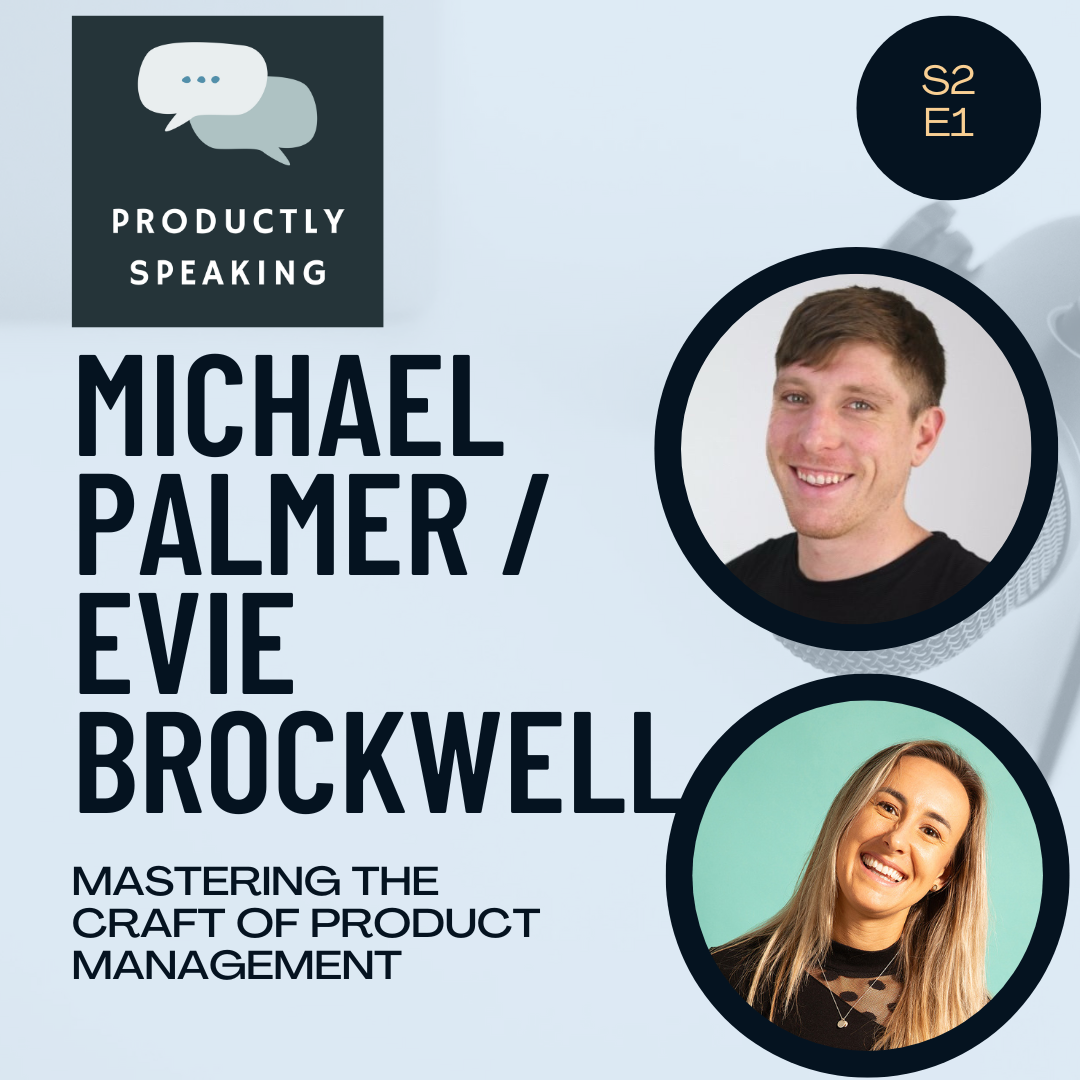


In this episode of Productly Speaking, Karl sits down with Michael Palmer and Evie Brockwell, hosts of the Product Confidential Podcast, to discuss various aspects of product management. The conversation covers stakeholder management, product market fit, career growth, and the role of AI in product management.
Key Topics:
- Stakeholder Management
- Product Market Fit
- Career Growth
- Advice for New Product Managers
- The Role of AI in Product Management
Quotes:
"If you're a product manager and you're not speaking to users, are you really a product manager?" - Michael Palmer
"The best experiments are the ones if they don't work, because you can learn everything about why someone might have hated that and then work out how to grow and improve." - Evie Brockwell
Resources Mentioned:
Call to Action:
Follow Evie Brockwell on LinkedIn for updates on her workshops and coaching programs.
Check out the Product Confidential Podcast on Spotify for more authentic product management conversations.
Welcome to Productly Speaking, the podcast that dives deep into the fascinating world
of product management. I'm your host, Karl Abbott. In each episode, I'll be bringing
you conversations with some of the most innovative and inspiring minds in the industry. Together,
we'll uncover their stories, insights, and the secrets behind their success. So whether
you're a seasoned product manager or just curious about the field, join us for an entertaining
and informative journey through the art and science of creating great products. Let's
give it a go. On today's episode, we're going to talk about stakeholders, product market
fit, growing your career, and the role of AI in product management. To have this conversation,
I'm pleased to welcome to Productly Speaking, the hosts of the Product Confidential Podcast,
Evie Brockwell and Michael Palmer. Evie had an amazing product leadership career at Booking.com
before deciding to quit the nine to five and travel the world. For the last three years,
Evie has been a consultant and works with companies like First Choice and Channel 4,
where she coaches product leaders to increase their confidence and add more impact without
burning out. Michael is a Manchester, UK-based product manager at the BBC, working on improving
the iPlayer front-end experience. He has a passion for putting users first and using tech for good.
To that end, Michael runs a product community called Product for Good. Evie and Michael,
welcome to Productly Speaking. Thank you. It's a pleasure to be here.
Thank you, Karl. Yeah, really looking forward to the chat.
Yeah. So, Michael, you presently work on one of the most iconic British brands in media,
the BBC iPlayer. How do you work to ensure that customer needs are understood and balanced across
the many different stakeholders that you undoubtedly have?
I really enjoyed hearing you say that sentence, Karl, to be honest, because I'm only seven weeks
into being on iPlayer. So it's quite new for me. I was at the BBC for two years before that,
working on an internal design system. So having the chance to move to iPlayer was like a bit of a
dream come true for me, to be honest with you. What I can say in regards to your question,
customer needs are something that I think is central if you're a product manager. I remember before I got
into product and I was reading product literature to try and get into the industry basically. And
like probably everyone, I started with Marty Kagan. And one of the things that stuck with me from that
was in his book Inspired, where he's saying that if you're a product manager and you're not speaking
to users and you're not involved in user research, are you really a product manager essentially?
And then when I actually managed to get into product, I just thought that like everyone had that
memo. And when I started seeing that some product managers keep a bit distant from research and let
other people do it and they just hear the feedback, I just like thought like, oh, okay, I've been told
by Marty Kagan, who's like, you know, the god of product not to ever do that. So I'm not going to do
that. And I'm going to be in every session that I can be in. So I think like I've always just kept
that as like a kind of guiding principle. And as a result of that, I find that that allows me to
be as best as I can be the voice of the user, because I am in every opportunity I can be with
the users. I'm always advocating for us to speak to more users. I find that by doing that, that means
that I can take the stories that I'm hearing from users to the other parts of the business.
Now, that's not to say that users have all the answers. They don't. But when you combine what users
are telling you about the product and what you're seeing with your own eyes about how users are
struggling with parts of the product, alongside some of the expertise from other parts of the
business, you can then start telling a compelling story about where the business is trying to go
and where the rub is hitting the road with users and what that actually looks like in reality.
To go back to your question that I've been so, so impressed when I've joined iPlayer that there's
like a really rich research and UX and design culture. Just this week, I've been involved in
some live user research where I'm at the BBC offices today, two floors above me, they've got like a fake
TV living room and we invited users in and they're sat on the couch and there's a TV with iPlayer on
and we're putting prototypes in front of them. And we're all sat behind a screen watching them
interact with it and they're being set tasks. So to see some of the designs that we've been talking
about all week, then being played out and seeing people interacting with them. I can now then go into
meetings with editorial colleagues or like my head of product or people above me and saying like,
okay, this big strategic thing that we're trying to do, here's what we've tried to do to move
towards it. Here's what we found from users. Here's what's validated what we believe. Here's
some new stuff that we didn't even think about that we've now arrived at as a result of actually
seeing things with users. At the BBC, we are blessed with really great editorial colleagues.
And what I mean by that is they're the people who in the broadcasting world, they would have chosen
what was on at nine o'clock at night, what was on at 10 and the TV guide basically. But we're now
moving in a world where people expect recommendations and they expect to have more
choice over that. And we as an organization are trying to figure out, well, how do we move
into that world? But what we are blessed with is like these editorial colleagues have such
a wealth of knowledge about programming and how it works. They've been doing it for years.
So they're experts at that. So we're trying to combine what we're learning from data and
fresh audience insights from sessions like I explained before with their knowledge and create
like a sort of Venn diagram that moves us towards that. Whilst we are trying to move
away from a fully curated world and one that is tailored more to individual taste, but with
curation mixed in with that, we're a bit different from other people on the market in the sense
that we're a public service broadcaster with a remit to inform, educate and entertain.
And I'm really proud to say that I work somewhere where we're not just trying to make algorithms
that will keep people endlessly watching content that will just keep them on screen. Like they're
trying to make people culturally enriched by some of the content that is available to
them. There's a sort of public good in what we're trying to do as well as just an algorithm.
To go back to your original question, we're trying to find a way to mix curation, which is like
the business needs with users' modern day expectations about being able to have more choice and recommendations.
And I think we're doing that in a way that brings audiences into it. And I'm just trying to
understand all the different views. I'm trying to understand the audience's views. I'm trying to
understand editorial's views and through those, like find a way that gets us to what the business
is trying to achieve in a way that the light uses. And I think you can have all like the fancy
frameworks you like, but essentially this comes down to building relationships, maintaining
communication, seeking where possible to create and ensure there's alignment. And when there is
difference, using your skills as a product person to influence, preferably with information from
user research or competitive analysis or data. That's how I'm trying to get customer needs into
the business and bring stakeholders along basically, Karl.
Yeah, thank you for that. I mean, that was a great answer. And those are some amazing examples of actual
research getting done. I mean, being able to be behind a screen, the invisible screen and being able to
see how people interact with the product. That's really amazing. Another aspect of this though,
is you guys have built BBC iPlayer, which again, it is an iconic brand. There is a tremendous amount
of reputation that comes with BBC iPlayer already. How do you balance moving it forward, you know,
moving it into those areas that you were talking about without upsetting kind of the existing base or
with carrying that base along with you so that that reputation is maintained?
I've joined a really fortunate time. What I mean by that is iPlayer, there's no two ways about it,
was an absolute trailblazer. Before there was Netflix, before there was Disney Plus, before there
was Prime, there was iPlayer. It really was a trailblazer and like power to the BBC for coming
up with it. But it existed and it was born out of a different world. It was born out of a broadcast
world where people sat down with the remotes and saw what was on television. And iPlayer was invented
to supplement that. If you missed what was on last night, don't worry, you can catch up with it on
the internet. That was a great solution for them. But the world has changed since then. Broadcast
viewing is just like continues to decline at a really alarming rate for the traditional world.
So with that, the BBC needs to move to where audiences are today, which is basically the global
streamers. They don't have their roots in broadcasting. What is normal for them is different from us.
To be honest, there's an understanding within the BBC that we need to change because we're
competing on a different market now. We're not just competing with terrestrial television.
We're competing with people across the globe, leading the way in terms of using data, using
recommendation based on your personal choices when you come on to watch stuff, your demographic
information. They're running like tons and tons of experimentation. There's an appreciation
that at the BBC, we need to move with the times to get to that, not only because we want to compete
and play to win, but also because audiences expect it now. If an audience goes to a streaming platform
and it's not tailored to their choices, that is weird for people now. The organisation has recently
recognised that it needs to move away from being a traditional broadcast organisation and move
towards being digital first. And with that, there's an alignment of resource to go with that ambition.
So a lot of that resource is being put behind improving our data platform capabilities,
improving our recommendation engines, having data scientists to help us present people with
better choices. But where my job comes into it, I lead the front end teams across mobile,
web and TV. And what we're trying to do is create the rails and what the page looks like that can house
these recommendations. So to go back to your question, whilst there's a lot of great tradition
at iPlayer, we're also in a time where from audiences using the platform, to our leadership,
to us in the teams, we know that we need to change. And we're trying to do that through
being brave, through trying new things and through relying on data and experimentation.
Very cool. Shifting gears a little bit, I want to ask a question to Evie. And that is,
you went from corporate life to product coaching. That's a move that can really only be done with
turning your product management skills onto yourself. So how did you get started on that?
And how did you assess your own product market fit? It's kind of interesting to think about
our own product market fit.
Yeah. And it's a unique challenge because it's harder to remove that personal element. And we all
know that if we are building a product and we have this hypothesis where we really want it to work
and you try and find all of the ways to make it work. So then doing that for yourself and your own
business and where you want to take that, takes that to another level. And it's something that I was
very conscious of when I first started was the fact that you can actually create a great product
for yourself if you apply everything that you know. And the way that I did that in the beginning
was to go, okay, how can I run a bunch of experiments? And that's experiments across different streams,
everything from how do I market myself and work out which marketing channels are bringing in the right
audience to me? How do I position myself and package my services in a way that appeals to people?
What are the problems that people actually want to be solved? Because I think that this is where a lot
of people fall down is that they've got a great skillset. They've got loads of knowledge, they've
got loads of expertise, but if they're not selling themselves in terms of that transformation and the
results that they can create for someone, no one wants to buy your expertise for the sake of expertise.
So knowing how to frame everything and position it is key and then being able to reflect on those
results and constantly look back and say, this is where I added loads of value and these are the
strategies and tactics that move the needle versus these are the things that haven't, is crucial.
And in some places I feel like I found great product market fit. The consulting stuff has been
really straightforward, it's been really easy. But then when I've tried to do things like product
coaching and move that to do it at scale, that becomes a lot harder because you're moving your
skill set from being able to execute on something really well to playing more of a sales and marketing
game, which obviously as a product person isn't always where your natural strengths are. So you have
to learn more of that side of things. It's not to say that the product market fit isn't there, but the
way that you're framing that proposition or the way that you're reaching the audiences or the way that
you're telling that message, you really do start to realize how many different factors go into
product market fit no matter what kind of company it is. So some of that stuff has been more challenging
or a longer journey, I would say. And the other thing that I think applies more to freelancers
slash solopreneurs or whatever the terminology you want to use more than businesses itself is that
actually one of the best, and actually this applies to a lot of businesses. If you look at startups that
have been really successful, like Airbnb, it came from their own need to solve a problem and a bit
of passion, and then it gained natural traction and then it grew. And the same often happens for you as
someone that runs your own business, is that when you find an avenue that you're passionate about and
start speaking about it organically, and then see what traction is there, they're the avenues that
have been far more successful for me than setting out with a strategic intention to say,
oh, I really want to exceed in this area next year. So I think there is a kind of cross parallel lesson
that a lot of people can take from that, which is really try and plant a lot of organic seeds and see
which ones grow.
Yeah, no, that is interesting. And yeah, it's like you say, it can be, you might think you have
everything in place for product market fit, and then you go out to the market and it's just something's
off, the calculation wasn't there, or it just wasn't quite what the market wanted. But then there's this
other thing that, eh, we'll give it a try and it takes off. You just never really know. It's really more art than
science when it comes to actually getting product market fit, I think.
Yeah, and I think that ability to be flexible, to not be dead set on one thing being the thing, that you are
happy to flow with that art, carry out those experiments and see what happens.
Well, best of luck to you as you continue to do that in the coming years. You've definitely
done well with it so far. Both of you have great careers that show a mastery of product
management. What are your next areas for growth?
I think for me, the space that I just outlined, I think I've probably indexed more towards user
research in the past and moving into a space where it's more audience facing than I've been in the
past because I've tended to build products for internal colleagues. I'm looking forward to being
in a space where there's A-B testing and more use of analytics and data. I know Evie at Booking has
got like a really rich history in that, but it's something I've always felt like I've not really had
in my arm as a product manager and something I've been really keen to like fill that gap. So there's that
and I think going back to the landscape I was explaining about before, so to give you an example
of one of the problems we're tackling. If you go on Netflix, their recommendation engine is quite
sophisticated. They'll have about 50, what we call rails. So basically rows that you can scroll
through. And at the BBC, we currently have 20. And what we've heard from user research is users think,
oh, they've only got a short homepage. So therefore they don't have a lot of content. Like with the BBC,
we've got a lot of content. We're just not using the asset that we have to house all that.
The business layer team is looking to actually make it possible to extend the page. But then
what we're doing is thinking, okay, if we've got a bigger page to play with, what's going to play?
And what is the design that's going to play? Is it going to be like a top 10 films? Or is it going
to be more like a selection of what we call dynamic collections, which algorithmically generated
collections that are tailored on your needs? So it's just a cool space to be in because
we're basically being imagined, being asked to reimagine what the homepage looks like
and use experimentation and data to prove out some of the ideas that we have. But
that doesn't mean they've all got to be good ideas. Finding out that like, oh, that idea was awful and
didn't fly. That's cool too. It's just having ideas, test and learn and trying to move as quickly as
possible. I'm really, really excited to play in that space because it'll be quite new for me going
from building for colleagues in the building, which I enjoyed, but it's just like a different step change.
Yeah. I really liked the growth mindset there as well. That's real good.
Yeah. And I'm like, Michael, I'm sure we'll have loads of chats about this,
but any AB testing stuff, I can share all of the knowledge. And basically the best experiments are
the ones if they don't work, because you can learn everything about why someone might have hated that
and then work out how to grow and improve. And it's just one of the best to get things out there
that you can really see in the real world and have data to support it as opposed to just going off
people's opinions. So yeah, definitely a fan of that world and can share as much knowledge as you like.
Can I ask on that? Like, what are you like as a numbers person? Like, are you comfortable with
numbers? Because to be honest, that's not how my brains always work. I'm probably more like left
brained. So like when numbers come off, I'm going to be like, so that's something that I'm challenging
myself to lean into more.
Yeah, I did get an A at A level maths. So I'm more right in that space. I don't know if that helps.
But the other thing, but then you meet like statisticians where I'm like, okay, I don't
really know what the p-value is, but we had loads of calculators and there's loads that exist online
that basically tell you like, this is good, this is bad, this is what your risk is. And
they're the most important factors. So you can read these really in-depth articles and get super
overwhelmed. But sometimes this is the best thing about being a product person is that you take the
complexity out of engineers, data scientists, analysts and go, here's what you really need to
know. Here's it in layman's terms. This is why it's important. So stick to that space and don't try
to get too much in the detail would be my advice.
That's good advice. I don't think I'd be any good in the detail in this space. And I think it's
always like, if there's people who are specialists, lean into them and try and simplify it as much as
you can. So I like that advice.
Yeah. Best product approach to everything.
Cole, would you like me to fire over my areas of growth?
Yeah, let's go for that.
Okay. I'm moving to an interesting space where my areas of growth are quite varied at the
moment. I'm back in this planting seed space. But some of the things that I really want to do
are more public speaking. I started doing a lot of that towards the end of last year and loved it.
So doing more in that space and trying to do more still in the product market fit space. So a lot of
that for me is more around the sales, the marketing and moving away from some of the more traditional
product things. So hopefully by the end of this, no matter what, I'll be this expert across
everything. And I could be a product marketing manager or anything else that I choose to go
into next.
Very cool. That would be excellent. Kind of following up from that, what would you guys
recommend to new product managers just getting started in the craft? Where should one put their
focus first?
I love this question because when I was wanting to get into product management, my story was I was a
marketing manager and I had been for about seven, eight years. And then towards the end of my time
in marketing, I found out about the product role and I thought like, oh, that's really where I want
to be. So it was like for about a year, I was still in marketing trying to think how I could move
across. And as I mentioned at the start, I was like reading loads of product books. I was listening
to podcasts. I was going to meetups and just trying to build my network and also reaching out to people
on LinkedIn. And what I found, what I'll always remember was people were so generous with their
time. I was not in product. I was just asking people like, oh, any advice? And most people who
I've reached out to would like spend time having a coffee or at least give me an email back or say,
listen to this or check this out. So I always try and keep that in mind. And like, I'm really
fortunate that I'm in a place in my life and career now where some people reach out to me and ask for
advice, try and pay back like the way that people were with me, because it would just be really
remiss to not do that basically, I think. So some of the things that I try and tell people is what
worked for me at that period, which is, as I've kind of touched on before, is like, just try and
connect. Like there's loads of stuff available online, be it like people on LinkedIn, podcasts like
this one that we're on, there's books, there's a million things on YouTube. Like you can really go and
arm yourself with a lot of knowledge just from what exists for free. So go out and do that.
And also whilst you're doing that, try and meet people, just try and help people who can then
introduce you to people. Like I've now got in a situation where when I see an associate job,
I send that on to about four people who I know are trying to get into the space because people
were kind enough to do stuff like that for me. I'm doing that for people who have reached out to me
and said, oh, I'm trying to get into the space. So just be proactive. I'd also say like,
whilst there are lots of resources and you can just learn, learn, learn, it can be a bit
intimidating. Like sometimes I think people try and make product management out to be this like
absolute science and you've got to do it this way and it's really shiny and there's all these
frameworks. But in my experience, it boils down to, do you have common sense? Are you able to
communicate well with people? Do you like people? And are you able to explain ideas and try and bring
people along? And if you can do those things, you'll probably be all right. So don't overthink
it. Yeah, it makes sense. And I think on top of that general advice, the practical things that I
would say are one of the biggest lessons that I learned. And I think a lot of people go through
this curve is learning the ability to say no, especially when you're first new to the role and
you've got all of these stakeholders that you think are experts and you're like, well, I have zero
knowledge. So I should just do what they say. And I made some real terrible mistakes earlier in my
career where we added date of birth to a checkout funnel for the purpose of gathering marketing data,
which tanked conversions. But I was like, oh, but marketing have asked for it. So I have to do it.
And that's not true. So learning that early and having the confidence to be able to say,
we should do this and we shouldn't do this, which like Michael says, comes from having some
common sense, but also from leaning into data and what the data is telling you early on in your
career. And also from speaking to the experts like UX, UXR and other product people around you to learn,
you can quickly grow that confidence to allow you to make the right decisions. So from a practical
point of view, I think that's a huge learning that people go through. In terms of things to avoid,
I think it's trying to become a master at everything all at once. I think if you go,
right, this month, I really want to get focused on the data and being able to make priorities better.
And then next month, I'm going to focus on product discovery. And the month after,
I'll focus on working with the development team. That can help you have a way more structured
approach than just feeling like you need to learn so many things because it can feel a bit
overwhelming to start off with.
Can I add as well on that? Something that I didn't mention in my answer was I was really blessed and I
still am really blessed to have had really great people mentoring me, both within the organization
I've been in. I've had great line management and I've just been fortunate with that. As well as
having great line managers, when I didn't have the experience, people to say, how do I do this?
What's an OKR? How do I lead this session? How do I set up a workshop? People to just talk you through
and bounce ideas off. That was vital. And if you don't have that in your workplace, there's people
who you can find online who might mentor you. There's people like Evie who provide product
coaching who can provide you that support to help you invest in yourself. I'd always encourage people
don't feel like you have to face all alone. Bounce stuff off people because it can be a lonely job
if you don't have a support network.
Are there things that you would recommend people avoid?
It seems to be a career that lends itself well to people making themselves ill. You hear about that
quite a lot. And I think that it seems to come down to people because there's always so much to do,
right? You're in the center of everything. You're in the center of the business, the engineering teams,
user research. You're going to be busy. Everyone's going to want to try and put a meeting in your diary.
And I just think trying to start your day by realizing like, what are the most important
things I can do today? And making sure that you're doing those things and not everyone else's
priorities. So like going back to what Evie said, like saying no to stuff. Like if it takes you away
from what is important for you and what you were trying to achieve that day, don't do it. Like that
meeting will happen anyway. Ask someone to send you a Slack update on what was talked about.
I heard a quote from Tony Blair where he said, don't let your diary control your priorities.
And I think that's completely it. Like if you can't do the things you're trying to do because
your calendar's full up, you need to ask yourself like, does that feel right? Because the answer's
no, isn't it? So don't do too much. Do what's sensible.
Yeah. And on that point, if anyone follows me on LinkedIn, I throw this stat out all of the time now,
but I did some research earlier this year and found that 92% of people in product had either
burnt out or been on the verge of it. And it feels like this natural cycle that every product person
feels like they have to go through to learn that lesson to say, and it comes from a wide range of
areas, but it is things like not taking control of your priorities, having the superhero complex and
trying to fix everything and say yes to everything. And from some of that ambiguity in what your role is
and what your focus is. And if you can focus on some of those areas early on in your career
and not go through that cycle, but be proactive in terms of setting those expectations, working out
where to focus, it can be a huge game changer to not just add an impact, but also it feeling
sustainable and feeling like you can add value over a long period of time. So totally agree with what
Michael's saying on a mission to change that.
Well, Michael's talking about the diary or the calendar, depending on what side of the pond you're
on. I've seen that meme that's like product manager and he's got, you can see his calendar
and it says, I wish I got invited to the important meeting. So the senior product manager is kind of
like, wow, there's not a lot of time left. And then by the time you get to like VP of product,
it's just like an auto decline. If it's important enough, they'll reach me elsewise.
Yeah. It's such a natural transition.
There's a lot of truth to it too.
I'm like, I've genuinely seen that play out everywhere. Like that's not just a meme,
that's reality.
Yeah, it is. It is. And that's why we laugh so much. And then we kind of cry a little bit
inside after we've finished laughing at it. They're like, oh yeah, that is true.
The next part of this podcast that I wanted to get into was talking about AI because it's not a
product management podcast. We're recording this in late 2024. It'll probably be out in early 2025.
The market won't have changed that much by then. 2024, the year of AI and everything.
And one of the more interesting product conversations about this has probably been
Claire Vo on Linny's podcast. Linny did a whole conference, but it was a small mini conference for
product managers. And Claire went up there and basically gave a talk with the clickbait grabbing
headline of product management is dead. And basically the whole gist of this was that product
management as we know it is definitely going to be dead because the rise of generative AI tools
make it to where a number of lengthy tasks can be shortened, giving us more time to do other tasks.
And she even starts to have this product person who now is responsible for basic design, basic
engineering, and basic product all in one person because they can use AI tools to basically supplant
all the rest of these bits. And that to me is a little bit far-fetched and out there. And I have
reasons why I kind of disagree with that direction, but she's not wrong to call out that this is
changing and that there are going to be definitive changes in how product management is done due to
the rise of these tools. So how are you guys incorporating AI into your work today? And if you're not,
then why not? I've probably been really slow to getting into using AI in my day-to-day practice.
But since I've started, it's been an absolute game changer for me, to be honest with you.
And especially since moving into this new team, because I'm actually across three teams today. So
there's a web team, there's a mobile team, there's a TV team, and all separate engineering teams,
multidisciplinary teams, UX, the lab. I'm across all three of them trying to give direction, but
they are essentially three teams. You could argue they should be three separate product jobs.
I have to produce PRDs, I have to produce JIRA tickets, I have to take user research and explain
that to people. And if you think I'm writing all these things out individually for all three teams
on my own, you are wildly mistaken because I don't think I'd be able to do my job if I wasn't
relying on co-pilot. And I think there's something really interesting in how you use AI. Because
I think if you're using it to do your job and do the thinking parts of your job, I think you have
problems. Because if you are getting AI to tell other people stuff, and you don't understand why,
or what is the reason behind what you're telling people to do, that's obviously going to cause
problems. But if you're using it to like, okay, I know what I'm trying to say, can you just tell
this in a more succinct way, please? Like, for example, what I use it for quite a lot is,
if I am writing like a product strategy document, I'll sit there on my own and I'll write out the
document. And then I'll say to co-pilot, do me a favor, just make this a lot more crisp.
And also maybe create some user stories about this part of the strategy document that are aligned
to this OKR. Or these are the major strategies that we're going for this quarter. Could you help
with the OKR process? And it just gives you like a start of a 10 that you can then either refine
yourself or alternatively you input into it and it refines what you've done. And it's making me a
better product manager. There's no two ways about that. And I don't think it's making me a lazier
one. I think I'm working better. I think I'm working smarter. But to go back to like the initial
like clickbait product management said, like it died last year as well, didn't it? With Brian
Chesky. So it's revived itself and died again, it seems. And my belief on that is like, if a
business gets to a point where it doesn't need alignment or Genetify AI gets to a point where it
can align marketing with sales, with user needs, then OK, maybe it is dead. I think we're a long
way off that. So therefore, I think there is the need for product management in that role, especially
if you're like in a sort of mid-level product role, like I am like senior. A lot of my job is to
like take the business goals that have come down for me from leadership and find a cohesion
within the team to deliver it. But also like looking left and right of me and making sure
that like all the teams are aligned and we're working together, collaborating on the thing.
AI can't do that. AI can help me to do that. But yeah, there's a big difference in that.
Yeah. And I think that one of the things that this is where I think the whole argument of we're
going to just be, we can use AI to supplement so much of the job falls apart. And that's that AI
requires input. Those models have to be trained. And if your data going into that training is
terrible, then you're going to have terrible output. And so if we stop as people creating,
because let's face it, what's trained these models, but all of our previous works.
So if we stop creating, it's going to stall. In my opinion, there's always going to be that
creative aspect to be able to feed the tool. Somebody's got to do that creating. And that's where
yeah, there are people out there that would argue that yes, we can get the AI good enough to where
it will be able to create just as good as a human. I don't hold that opinion, but that is one that is
out there. And I think that that's kind of where this difference is. It's like, yeah, if you don't
believe that we're going to make that leap to where it can create as good as one of us, then yeah,
there's no real threat there and it's not going to take things out. But yes, if it ever did get to
that point where it could do that, that would be a problem. But I think if it got to that point,
we might have bigger problems too. And we might not be so worried about what's going on in that
space. I'm like, this conversation is taking such a turn, but product is a people job as well. And
that alignment part is huge because we all know that even if we can craft the best OKRs in the
world, half of our job is convincing other people as to why they're the biggest priority and why they're
important. If AI, if everyone manages to just have an AI person that can agree all of that for them,
I will be mind blown. I think there is so much more in the power of that stuff.
And then I also don't think it's dead. I think it will get rid of all the tasks that we all used
to hate anyway. All of those manual, lengthy, not really using your brain to think kind of tasks.
So you mean that writing PRDs is not something you dream about doing on a daily basis?
From a nightmare point of view, yes.
And it can, it can really help with all of these things because I have used it less from a,
hey, here's how I use it with my clients. But I've used it more from a personal productivity
point of view and from everything from my own customer research, from being able to record my
calls and share out transcripts that people can easily link back to. Those kinds of things or like
having that person to bounce ideas from where you say, hey, like I've written this, do you think
it covers all of these key points? It can really just increase your productivity so much over. And
one of the quotes that again came from Marty Kagan a few years ago was that you can't be a good
product person unless you work at least 60 hours a week. And don't quote me on that. Maybe it wasn't
60, but it was, I was about to say some pretty outrageous number, but that could be normal in
America. So, but it's like, you can, because you can start to remove a lot of those cumbersome tasks
and add the value in other spaces. I don't know a single product person that went, oh, I've got some
spare time. So having AI on your side is only beneficial in my opinion.
Yeah. Yeah. No, I can agree with that. Yeah. I've not met product people with spare time either.
And just being able to get some of that time back from, you know, now I don't have to spend 30 minutes
to an hour doing this. It's great. And I mean, even in podcasting, one thing that I've noticed,
and this has been amazing just in this year, now I can take the transcript because what I'll do with
this podcast, actually, when I'm finished is I'll run it through open AI whisper locally. It'll spit
out a transcript. I'll take that transcript in a text file and give it to copilot and say,
now write the show notes, write the LinkedIn post to promote this. It'll be 80% of the way there.
And that is an amazing starting point. I won't put those show notes and LinkedIn post out directly
from AI, but I'm 80% done. And so what previously would have taken having to listen back through
the entire episode and like taking notes while you're listening to it and then compiling it.
Now I can just push this through the transcript, push it into that and go, yes, that is what we
talked about. Let me refine this a little bit more. And it goes and pulls out quotes and stuff too,
which pulling out quotes from a podcast, that takes a long time to do and to actually get that
quoted. It's amazing what you can save time on. And it's not like this is a brain work. It's just
busy work that I'm able to power through faster.
I don't know about you, but Karl's description there gave me shudders thinking back to our early
podcasts when we were doing that exact process. I don't know how we didn't quit then. It was awful,
but now it's like we do the same as you.
I think we did it for about three episodes and like we used to like take an episode each or half
it. And then we were like, surely there's a tool for this. And this is obviously like how much it's
advanced just in 2024 that we didn't even know what existed at the beginning. And now like we're all
using AI in different tools without even knowing it. And like you say, I think it's still got a long
way to go in terms of tone of voice and everything else, but we're getting there.
Yeah. I think, I think one of the things that I think with AI though, it's like, if you use it
as a tool, as we've said, to improve your productivity, so you've got more time to do
deep thinking on stuff rather than manual tasks, that's great. But I think using it in lieu of
deep thinking is problematic. So I'll give an example of that. So I went to a talk at a product
tank and a user, this is like when AI was like just chat GPT had just come out and people were like,
wow, this is crazy. This person was saying that they had taken a load of user research
analysis, like all posted notes on the mirror board. And they had chucked all of that into
chat GPT and said, pull out some themes and some findings from this, please. And then he had set
his user research team, that same exercise. And whereas they'd taken two days and chat GPT had
taken like five minutes, they pretty much arrived at the same place. So in terms of like the actual
task of theming stuff and coming out with findings, it was the same. But the user research
team, whilst they had taken two days, had generated like other ideas through being in the room together,
putting things together and talking and like, you know, taking in the information. So there is
something still about like, you need to be doing work to have ideas and to bring stuff up. So it's
finding that balance, I think.
Yeah, yeah. And there is a balance there, because it's incredibly good at data classification,
just like you've mentioned. I mean, like in five minutes, you've got what took two people or a ton
of people two days to come up with. That's amazing. But now sit that same group of people around with
that output from chat GPT and say, okay, these are the themes for all of this. Let's go through and
verify it and see if there's anything else that we might have missed and have that conversation.
Still take less than two days, I suspect at that point.
Yeah, yeah.
So, yeah, it's pretty cool. So you are both co-hosts of the Product Confidential podcast. Tell our
listeners about Product Confidential.
Oh, Evie, how would you describe it? Do you want to go?
Yeah, it'll be funny because I'll describe it and then you can tell me if it's the same description
or if we're totally misaligned.
Yeah, okay. Sounds good.
So we basically started this podcast about 18 months ago now and the gap that we'd found in
the market was that there weren't a lot of people that were having down-to-earth product
conversations that were super relatable. There's a lot of this clickbait, like product management's
dead or like, here's how we do everything at Google, which just isn't applicable to everyone's
role in company. So we basically aim to have some more of these down-to-earth practical
conversations that give people real tangible advice to take forwards, pretty much like you're
doing as well, Karl.
Yep, we saw the same gap in the market.
Is that aligned with you, Michael?
Yeah, no, definitely. That's exactly how we thought we'd get started. And what's been
really great is like the feedback that we've had from people both online and when we've met
people who listen is like the word authentic comes out quite a lot. It's just like authentic
and I find it relatable and that's like exactly what we were going for. So that's like music
to our ears when we hear that really. We try and see it as like sort of therapy for people.
Again, it's like it can be a lonely role, can't it? So if there's a space that you can go to
and hear other people talking about their successes, but also about the failures and what's worked
as opposed to I'm this like elite level product manager and here's how great I am and here's
how I've 10x this, like that can get a bit nauseating after a while because it's not
the world we all live in. But that doesn't mean like we, you know, we're not doing well.
And is there a website or should people just find you on the podcast platforms?
I don't have a website. We've got the Spotify podcast page. People search for
product confidential on either that or LinkedIn, you'll find us or reach out to Evie or I on LinkedIn.
Yeah, excellent. And then Evie, you're a product coach. How can people work with you?
Yeah, thank you. It always feels weird when I'm in this position where I'm like,
oh, now I pitch myself. But I post all of my content on LinkedIn. So if anyone finds me there,
you can find out what I'm up to. In 2025, I'm doing some free workshops in January that anyone
can join. So a good way to kickstart the year. And I have a group coaching program, which makes it
super affordable. And I'll be doing a bunch more work on burnout. So if that's a topic that people
really want to overcome, then come my way and I'd be more than happy to help.
Excellent. And then one final question to help our audience get to know you a little bit better.
And this is for both of you individually. So you're not trying to answer this as a group.
What hobby do you think would be a lot of fun to get into?
I've always fancied having to go at fencing. So the thing with swords.
Yeah, that always looks good. There you go.
They had a fencing club at my university. And I was like, universities are one of the best places
to get involved with these things that you could never do anywhere else. So maybe you need to go
back and restudy.
But I am. I am doing a master's, aren't I? And I hadn't thought about that. Maybe this is my
way of doing fencing. It didn't really happen that much in Liverpool.
Yeah, exactly. I don't know. I feel like I need to go super rogue now because I'm like most hobbies I've
tried. The one thing is, I don't know if this, you can't really call it a hobby, but I really want
to learn how to ride a moped or a motorcycle. And I'm petrified of it. So I keep saying it's going
to be a goal for each year, but then I keep putting it off. So maybe in 2025.
Follow LinkedIn to find out if she keeps that promise.
Or if she ends up in hospital.
That is the fear. And as somebody who broke his leg ice skating earlier this year,
I'm not the one to talk to about trying dangerous things.
Hobbies, dangerous things, ice skating. But you'll be like, I'll never do that again.
Yeah, yeah. I have no desire to go back.
Fair.
All right. Well, thank you both for your time on the podcast and wish you well.
You're welcome. Lovely to chat.
This episode of Practically Speaking was brought to you by the Letters P&M.
If you enjoyed our conversation, be sure to subscribe so you never miss an episode.
Share this podcast with your friends and anyone who loves a good story about product management.
We'd love to hear your thoughts and feedback. Visit us at www.productlyspeaking.com.
Drop us an email at hello at productlyspeaking.com.
Or join the discussion on Matrix at hashtag productlyspeaking colon matrix.org.
Thank you for tuning in and we'll catch you next time.
We'll catch you next time.

