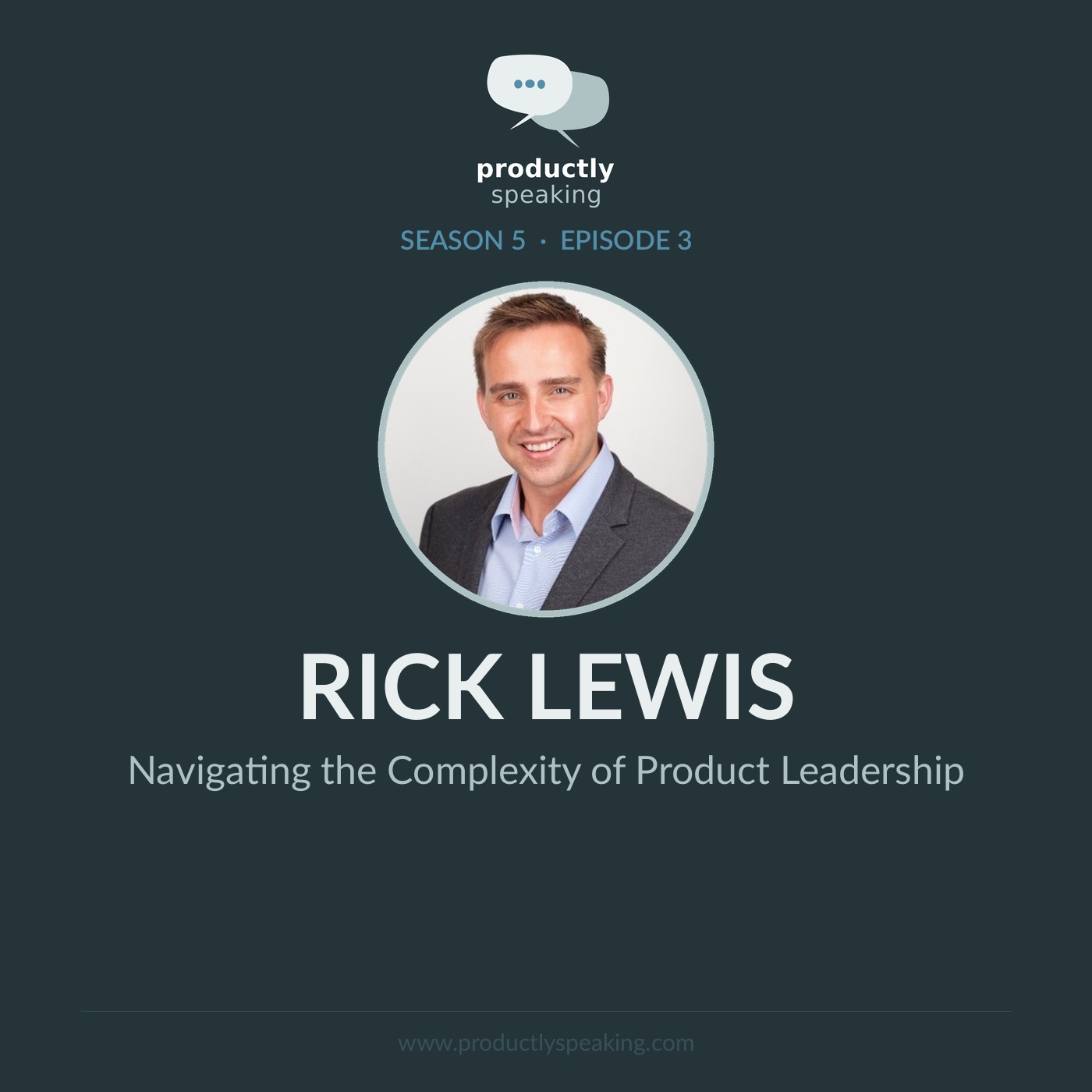
S5E3: Navigating the Complexity of Product Leadership with Rick Lewis


 RSS Feed
 What if the moment everything tilts sideways at work could actually make you better at your job? In this episode, Rick Lewis sits down to talk about the messy middle of change, the kind that knocks the wind out of a team long before it becomes one of those polished “growth stories.”
Rick brings stories from big reorganizations, mergers that paired frenemies into one team, and the kind of customer feedback loops that only surface after months of digging. He talks about the small, painfully human moments that happen when people cling to the old way because it feels safer, and the surprising clarity that shows up once you stop trying to control what can’t be controlled.
There is a moment in this conversation where Rick describes two teams who once competed against each other suddenly being told they’re on the same side. The awkwardness, the reluctance, the gradual warmth that followed. If you've ever walked into a room where no one quite trusts the situation yet, this one will land close to home.
And then there’s his simple, grounding ritual: stepping outside, clearing his head, and coming back to the problem with a little less fear and a lot more perspective. It’s the kind of habit product people rarely talk about but quietly rely on.
This episode is for anyone who has ever looked at change and thought, “I know this is supposed to make sense eventually… but right now it just feels like loss.”
Quotable Moments
- “Change isn’t something you lose. It’s something you learn how to move through.”
- “Data is gold dust. Reducing uncertainty is the whole job.”
- “Once you get past that initial fear, the whole team shifts into a different gear.”
About the Guest
Rick Lewis is a product leader who has navigated startups, acquisitions, global teams and more than his share of thorny restructures. Formerly VP of Commercial Products at Element, he now works on AI solutions at Element Materials Technology. He brings a calm, grounded way of working that only comes from years spent facing ambiguity head on.
Call to Action
If Rick’s stories helped you feel a little less alone in the chaos of product work, stick around. Subscribe, share the episode with someone who’s grappling with change of their own, or reach out if you’ve got a story that deserves some daylight. Product work is rarely tidy, but it goes down easier when we learn from each other.
Disclaimer: This transcript was generated and edited with the help of AI and may contain errors.
Intro
Karl Abbott:
Welcome to Productly Speaking, the podcast with real stories from real product people about the messy, surprising, and sometimes brilliant work of building things. I’m your host, Karl Abbott. No perfect processes. No polished answers. Just honest conversations and lessons learned the hard way.
Today’s guest is Rick Lewis. Rick was previously VP of Commercial Products at Element, where he led product strategy for a global SaaS platform. Now he works with Element Materials Technology on AI solutions. One thing that stands out about Rick is his ability to project calm while navigating change.
Understanding the First Moments of Uncertainty
Karl:
Rick, what’s the first thing you do when uncertainty hits?
Rick Lewis:
I try to take the broadest view possible. Change can be shocking, but once you step back and look at what it actually means and what’s in your control, the path forward becomes clearer. People fear change because they assume it’s bad, but it’s just part of life. Understanding what you can control versus what you can’t is essential.
Why Uncertainty Feels So Personal in Product
Karl:
Why does uncertainty feel especially uncomfortable in product?
Rick:
Product folks tend to be data‑driven and a little controlling. When something outside our plan disrupts the roadmap, it feels like losing something we’ve invested in emotionally. But instead of focusing on what feels “lost,” it helps to ask how we adapt and move forward.
Misconceptions About Change
Karl:
What’s the biggest misconception about change in tech?
Rick:
That it’s inherently negative. Innovation is change. We should reframe shifts as opportunities to move faster than competitors. Even big events like IPOs, layoffs, or restructurings have both positive and negative sides depending on where you sit.
Handling Change as a Leader
Karl:
What helps you project confidence when you’re leading through ambiguity?
Rick:
Understand the facts. Make sure they’re right. Have an initial plan. Communicate transparently once you have clarity. Communicating too early creates more uncertainty, not less.
When News Leaks Early
Karl:
What happens when rumors get ahead of the official message?
Rick:
It happens. Transparency and trust make it easier to repair. If you’ve been withholding information or not being truthful, the damage is much harder to fix. When something leaks, acknowledge what’s true or not and explain why timing matters.
Product Change Is People Change
Karl:
There’s overlap between handling personnel changes and product changes, especially when customers are impacted.
Rick:
Absolutely. Changes like licensing updates or pricing shifts can feel unwelcome to customers even if the business reasoning is sound. Companies that hide or sugarcoat get called out quickly. Product leaders must be advocates for the customer when communicating these shifts.
Balancing Today’s Customers with Tomorrow’s Market
Karl:
What about when your current customers want one thing, but you need to pursue a new market?
Rick:
It’s especially tricky in startups and scaleups. Your ideal customer profile often changes as you learn. Sometimes you must consciously deprioritize the old ICP. The mistake is drifting into a new one without realizing it. That creates confusion and resentment.
The Temptation of Multiple ICPs
Karl:
Is having multiple ICPs just a function of scale?
Rick:
It’s possible at scale, but only if your organization and products can truly support them. Many companies want to have their cake and eat it too. It rarely works unless the overlap is real.
When User Feedback Never Reaches You
Karl:
In B2B, the buyer and user are often different. How do you manage when user pain never reaches the product team?
Rick:
Product must keep direct communication channels with actual users. Regular check‑ins prevent you from assuming silence means satisfaction. It’s like eating healthy: not always fun, but necessary. Sales, support, marketing, engineering, operations—all provide signals you must stay on top of.
Dealing with Conflicting Feedback
Karl:
What do you do when the data feels noisy or contradictory?
Rick:
I go back to data. Reduce uncertainty as much as possible. Use metrics, logs, bug reports, experiments. It doesn’t need to be deep PhD‑level analysis, but it must be structured.
Adapting Without Losing Your Product Vision
Karl:
How do you balance a clear product vision with big new opportunities that require changes?
Rick:
Classic challenge. A big deal comes in, but the customer wants something totally different. You have to ask how it affects your ICP and existing product strategy. Sometimes the answer is no. Other times you partner with another company to deliver what’s needed without derailing your roadmap.
Partnerships Done Right
Karl:
Partnerships can unlock growth if handled well.
Rick:
Yes, but you must be clear on expectations, responsibilities, and costs. Otherwise you end up spending time without getting the actual value you expected.
Embracing Change at the Right Pace
Karl:
What’s one practical habit to help people embrace change?
Rick:
Keep perspective. Avoid the frog‑in‑slow‑boiling‑water scenario. Use retros. Break big change into bite‑sized steps. Understand the starting point even if the end point isn’t fully clear.
If Tech Teams Could Change One Thing About Change
Karl:
If you could change one thing about how tech teams approach change, what would it be?
Rick:
Don’t fear change just because it wasn’t invented here. Once people get past that initial resistance, momentum builds quickly.
A Story of Turning Resistance into Success
Karl:
Can you share a story where initial fear led to unexpected success?
Rick:
After a startup I worked for was acquired, we were merged with another startup we had competed with. The two teams didn’t trust each other. Through daily check‑ins and cross‑training, people bonded. It became one of the most rewarding experiences of my career.
Practical “Keep Calm and Carry On” Advice
Karl:
How do you turn “keep calm and carry on” into something actionable?
Rick:
Understand what you can change and what you can’t. Focus on useful work. Breaking issues into smaller problems reduces fear and builds momentum.
A Habit That Keeps You Grounded
Karl:
What’s one habit that keeps you grounded?
Rick:
Taking a walk. Getting outside resets your mind. You come back clearer and more capable of solving the real problem.
Closing
Karl:
Thank you for joining us, Rick.
That’s Productly Speaking, brought to you by the letters P and M. If this resonated, subscribe and share. Real stories travel best by word of mouth.

I am a senior technical leader with a "Product-first" mindset and over 20 years of experience scaling innovation in AI, communications, and payments. Currently, as Director of Engineering (Digital and AI Products) at Element Materials Technology, I specialize in building product & engineering cultures that are deeply aligned with product strategy and commercial outcomes. My journey includes pivotal product leadership roles, such as VP of Product at Element Creations (element.io) and Co-founder & CPTO of Onedox, where I mastered the art of translating technical complexity into market-ready solutions. I pride myself on being the bridge between the server room and the boardroom, ensuring that every architectural decision drives genuine customer value. Outside the office, I am a lifelong maker and "tech fanatic," usually found in my workshop building IoT systems, architecting home automation, or restoring custom motorbikes.


